


Medical Hair Encyclopedia
Dermatological pathologies and evidence-based clinical guidelines at international standards.
PCOS (Polycystic Ovary Syndrome) and Hair Loss
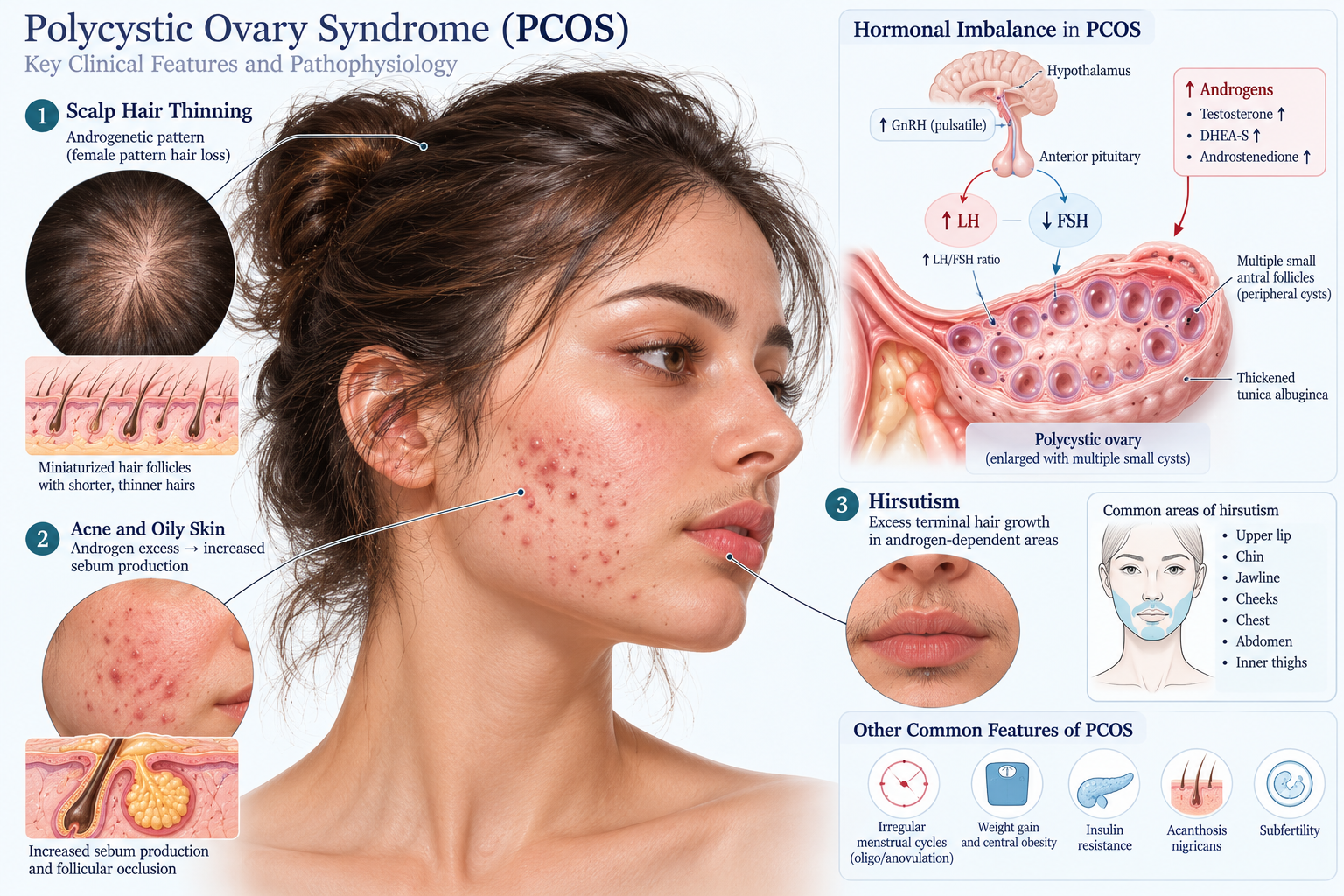
Figure 1: Systemic manifestations of Polycystic Ovary Syndrome (PCOS) on hair and skin.
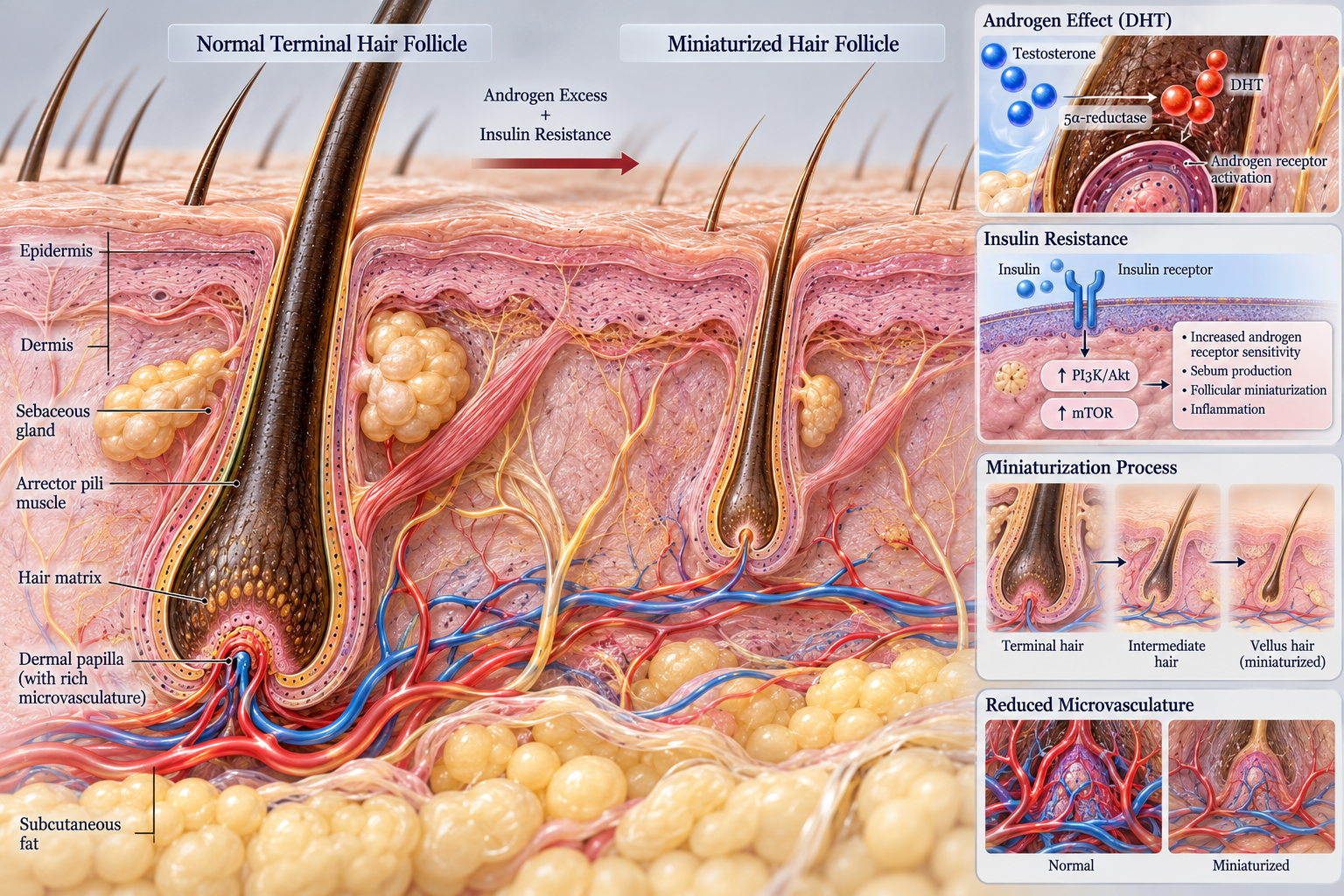
Figure 2: The miniaturization process in the hair follicle caused by insulin resistance and elevated androgens.
📌 Patient Information Section: What Does This Condition Mean?
What is Polycystic Ovary Syndrome (PCOS)?
PCOS is a hormonal (endocrine) condition characterized by hormone imbalances, frequently seen in women of reproductive age. It affects ovarian function and numerous systems throughout the body.
Does PCOS Cause Hair Loss?
Yes. In PCOS, male hormones (androgens) may be present at slightly higher levels than normal, or the body may become more sensitive to these hormones. This condition leads to the weakening of hair roots, causing hair strands to thin over time and fall out. It typically manifests as "female pattern hair loss."
What Are the Other Symptoms of PCOS?
- Menstrual irregularities or absence of menstruation
- Excessive skin oiliness and persistent acne
- Increased facial or body hair growth (hirsutism)
- Difficulty losing weight and a tendency to gain weight
What Should Be Done?
If your hair loss is accompanied by some of these symptoms, shampoos or external care products alone will not be sufficient. A treatment plan must be devised from within by performing hormone tests under the guidance of a dermatology specialist and a gynecologist.
🩺 Clinical & Medical Guide for Physicians
Clinical Trichology Protocol: PCOS-Related Female Pattern Hair Loss (FPHL)
- Pathophysiology: Hyperandrogenism of ovarian and adrenal origin increases the conversion to dihydrotestosterone (DHT) in peripheral tissues via the 5-alpha reductase enzyme. This shortens the anagen phase duration and triggers the progressive miniaturization cycle in hair follicles.
- Insulin Resistance and SHBG Relationship: Hyperinsulinemia, which frequently accompanies PCOS cases, suppresses the synthesis of Sex Hormone-Binding Globulin (SHBG) in the liver. This mechanism accelerates follicular damage by increasing the ratio of circulating free and biologically active testosterone.
- Diagnostic Approach and Laboratory Investigation: Serum total/free testosterone, DHEAS, LH/FSH ratio, 17-OH progesterone, prolactin levels, and metabolic screening (fasting glucose, HbA1c, HOMA-IR). Trichoscopic findings: Focal atrichia, more than 20% variability in hair diameter (miniaturization), and perifollicular findings.
- Evidence-Based Treatment Modalities: Lifestyle modulation, increasing insulin sensitivity, anti-androgen agents, insulin sensitizers (metformin/inositol derivatives), topical minoxidil (5%), and adjuvant procedural approaches (PRP/microneedling). Additionally, expertise and treatment approaches can be reviewed for clinical and surgical evaluations.
Scientific References and Bibliography
- Rashid R, Mir SA, Kareem O, Ali T, Ara R, Malik A, Amin F, Bader GN. Polycystic ovarian syndrome-current pharmacotherapy and clinical implications. Taiwan J Obstet Gynecol. 2022 Jan;61(1):40-50. doi: 10.1016/j.tjog.2021.11.009. PMID: 35181044. PubMed Link
- Mavulati SC, Dodoala S. Clinical Profile of Polycystic Ovarian Syndrome in Women From Bhimavaram: A Cross-Sectional Study. Cureus. 2025 Apr 7;17(4):e81854. doi: 10.7759/cureus.81854. PMID: 40342475; PMCID: PMC12059241. PubMed Link
- Kolhe JV, Chhipa AS, Butani S, Chavda V, Patel SS. PCOS and Depression: Common Links and Potential Targets. Reprod Sci. 2022 Nov;29(11):3106-3123. doi: 10.1007/s43032-021-00765-2. Epub 2021 Oct 12. PMID: 34642910. PubMed Link
- Azziz R, Carmina E, Chen Z, Dunaif A, Laven JS, Legro RS, Lizneva D, Natterson-Horowtiz B, Teede HJ, Yildiz BO. Polycystic ovary syndrome. Nat Rev Dis Primers. 2016 Aug 11;2:16057. doi: 10.1038/nrdp.2016.57. PMID: 27510637. PubMed Link