Dr. Muhammet Özgehan
TR EN DE FR RU AR

Medical Hair Encyclopedia

Dermatological pathologies and evidence-based clinical guidelines at international standards.

Telogen Effluvium (Widespread Hair Loss) Diagnosis and Treatment Guide
Prepared by: Dr. Muhammet Özgehan | Turkish Hair and Scalp Diseases Association

This guide has been compiled by Dr. Muhammet Özgehan in light of current literature.

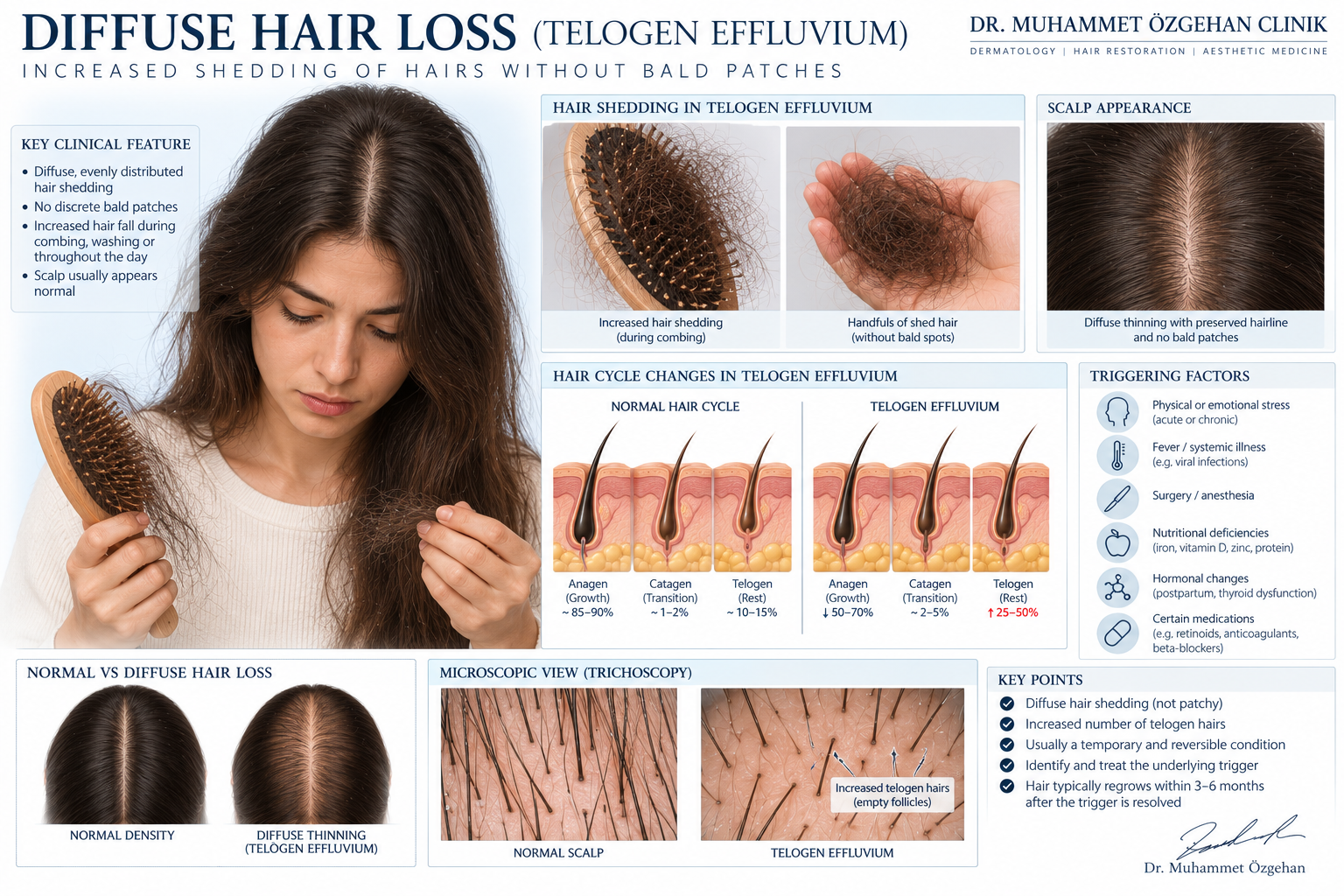
Telogen Effluvium Widespread Hair Loss Clinical and Medical Illustration

📌 Patient Information Section: What Does This Condition Mean?

Our hair goes through growth, resting, and shedding phases within its normal cycle. Telogen effluvium is characterized by a sudden increase in the proportion of hair in the resting phase due to various stress factors or deficiencies in the body, leading to widespread thinning, with hair coming out in handfuls across the entire scalp a few months later.

  • Acute vs. Chronic Distinction: Begins 2-4 months after a triggering event (Acute: febrile illnesses, surgeries, postpartum, shock diets). If shedding lasts longer than 6 months, it becomes chronic (Chronic: continuous iron/vitamin deficiencies or chronic stress-related).
  • Does it Cause Localized Baldness?: No, it does not cause localized baldness; it manifests as a general loss of volume and thinning of the hair. When the trigger is eliminated, the hair fully returns to its previous state.

🩺 Clinical & Medical Guide for Physicians

  • Diagnostic Criteria and Clinical Findings: Anamnesis of diffuse (widespread) volume loss. Positive pull test for active shedding.
  • Mandatory Laboratory Panel:
    • Complete Blood Count (Anemia screening)
    • Serum Ferritin and Iron Binding Capacity (If Ferritin < 50 ng/mL, follicular synthesis is negatively affected)
    • TSH, Free T3, Free T4 (Thyroid function tests)
    • Vitamin B12 and Vitamin D levels
  • Current Treatment Protocols:
    • Etiological Correction: Addressing the primary systemic cause or deficiency triggering hair loss (e.g., iron/ferritin replacement). Additionally, specialized and treatment approaches can be reviewed for clinical and surgical evaluations.
    • Clinical Supports: Mesotherapy or PRP applications to accelerate root metabolism and support the anagen phase.

Scientific References and Bibliography

  • Asghar F, Shamim N, Farooque U, Sheikh H, Aqeel R. Telogen Effluvium: A Review of the Literature. Cureus. 2020 May 27;12(5):e8320. doi: 10.7759/cureus.8320. PMID: 32607303; PMCID: PMC7320655. PubMed Link
  • Hughes EC, Syed HA, Saleh D. Telogen Effluvium. 2024 May 1. In: StatPearls [Internet]. Treasure Island (FL): StatPearls Publishing; 2024 Jan–. PMID: 28613598. PubMed Link
  • Rebora A. Telogen effluvium: a comprehensive review. Clin Cosmet Investig Dermatol. 2019 Aug 21;12:583-590. doi: 10.2147/CCID.S200471. PMID: 31686886; PMCID: PMC6709511. PubMed Link

Telogen Effluvium (Stress and Seasonal Hair Loss) Frequently Asked Questions

Questions about telogen effluvium processes and treatment approaches, answered with the expertise of Dr. Muhammet Özgehan's Clinic.

Telogen effluvium is a type of widespread hair loss characterized by a large number of hair strands in the growth (anagen) phase being prematurely forced into the resting (telogen) phase due to a sudden trigger, leading to mass shedding 2-3 months later. Dr. Muhammet Özgehan states that this condition is typically caused by severe stress, febrile illnesses, surgeries, postpartum hormonal changes, sudden diets, or vitamin deficiencies.

Acute telogen effluvium usually begins 2-3 months after a specific trigger and resolves spontaneously within 6 months once the trigger is removed. Chronic telogen effluvium, however, is when shedding persists for longer than 6 months; it often recurs due to underlying continuous thyroid problems, low iron/ferritin, or ongoing stress factors. Dr. Muhammet Özgehan emphasizes that clearly distinguishing between these subtypes is essential for planning the correct treatment.

The most fundamental step in treating telogen effluvium is identifying and eliminating the systemic or triggering cause of the shedding. Current approaches applied at Dr. Muhammet Özgehan's clinic include:

  • Comprehensive Blood Tests and Metabolic Screening: Detailed analysis of ferritin, iron, B12, vitamin D, zinc, and thyroid (TSH) levels.
  • Hair Follicle Revitalization Protocols: PRP and mesotherapy treatments applied to accelerate the hair cycle recovery process and nourish the follicles.
  • Medical Support and Supplement Planning: Personalized nutrition and supplement programs under medical supervision to address deficiencies.

In telogen effluvium, hair follicles are not permanently destroyed or killed; therefore, the condition does not directly lead to complete and permanent baldness. Dr. Muhammet Özgehan states that when the triggering factor is eliminated and necessary medical support is provided, hair largely regains its former density, but this recovery cycle requires patience and can take several months.

To protect hair strands and support the recovery process during this period, the following should be considered:

  • Being gentle when washing and combing hair, avoiding excessively hot treatments and aggressive chemical applications.
  • Adopting balanced, regular eating habits rich in protein and vitamins instead of crash diets.
  • When widespread hair loss begins, instead of trying unverified products, visit the clinic without delay to have tests done to identify the root cause.

For Your Questions and Clinic Appointment

For any questions about telogen effluvium, seasonal hair loss, and personalized treatment planning, or to schedule an examination appointment, you can contact Dr. Muhammet Özgehan Clinic immediately.