Medical Hair Encyclopedia
Dermatological pathologies and evidence-based clinical guidelines at international standards.
Vitamin and Mineral Deficiencies and Hair Loss
Prepared by: Dr. Muhammet Özgehan | Turkish Hair and Scalp Diseases Association
This guide has been compiled by Dr. Muhammet Özgehan in light of current literature.

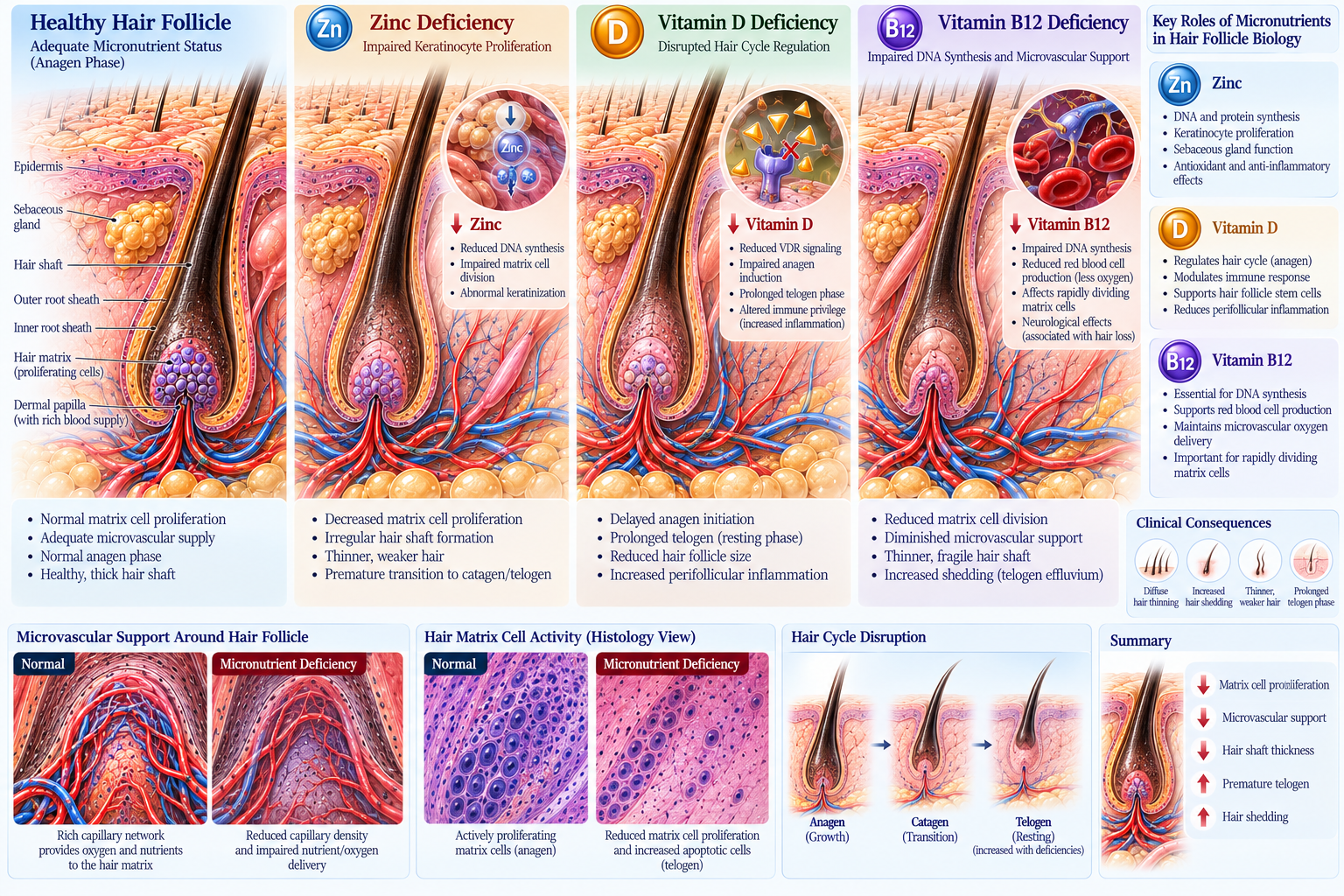
Figure: Cellular effects of deficiencies in essential micronutrients such as zinc, vitamin D, and B12 on the hair follicle cycle.
The Role of Micronutrients in Hair Health
Hair follicles are among the tissues with the highest rate of cell turnover in the body. This high metabolic activity requires an extensive reservoir of vitamins and minerals for protein synthesis, enzyme cofactors, and DNA replication. As summarized in the visual above, a deficiency in essential micronutrients directly disrupts the hair cycle and reduces hair quality.
📌 Patient Information Section: What Does This Condition Mean?
Why Are Vitamins and Minerals Important for Our Hair?
Hair roots consist of some of the fastest-dividing cells in our body; therefore, they require high amounts of energy, protein, vitamin, and mineral support for healthy hair development.
Which Deficiencies Lead to Hair Loss?
- Zinc: Plays a critical role in hair follicle tissue repair and protein synthesis.
- Vitamin D: Directly involved in stimulating the hair follicle cycle and the development of new hair roots.
- Vitamin B12 and Folate: Necessary for cell division and the production of red blood cells that carry oxygen to the hair roots.
What Should Be Done?
If widespread hair loss, dullness in hair quality, and breakage are experienced alongside chronic fatigue, blood tests must be performed for a definitive diagnosis; deficient vitamins and minerals should be replaced under the supervision of a specialist physician, not with random supplements.
🩺 Clinical & Medical Guide for Physicians
Clinical Trichology Protocol: Micronutrient Deficiencies and Hair Loss Management
- Pathophysiology: Micronutrients serve as essential cofactors in enzyme pathways that regulate the proliferation of hair matrix keratinocytes. Zinc deficiency impairs protein synthesis and cell mitosis; meanwhile, vitamin D receptor (VDR) signaling is vital for the initiation of the normal anagen hair cycle.
- Diagnostic Approach: Screening of serum zinc, 25-hydroxy vitamin D, serum B12, and folate levels. Detailed questioning of the patient's dietary habits, malabsorption syndromes, or history of restrictive dieting.
- Evidence-Based Management: Targeted micronutrient replacement based on quantitative serum deficiencies. Excessive intake of fat-soluble vitamins or trace elements should be avoided (e.g., excessive selenium or zinc intake can paradoxically trigger hair loss). Additionally, expertise and treatment approaches can be reviewed for clinical and surgical evaluations.
Scientific References and Bibliography
- Yongpisarn T, Tejapira K, Thadanipon K, Suchonwanit P. Vitamin D deficiency in non-scarring and scarring alopecias: a systematic review and meta-analysis. Front Nutr. 2024 Oct 2;11:1479337. doi: 10.3389/fnut.2024.1479337. PMID: 39416654; PMCID: PMC11479915. PubMed Link
- Cheung EJ, Sink JR, English Iii JC. Vitamin and Mineral Deficiencies in Patients With Telogen Effluvium: A Retrospective Cross-Sectional Study. J Drugs Dermatol. 2016 Oct 1;15(10):1235-1237. PMID: 27741341. PubMed Link
- Santucci NR, Alkhouri RH, Baker RD, Baker SS. Vitamin and zinc status pretreatment and posttreatment in patients with inflammatory bowel disease. J Pediatr Gastroenterol Nutr. 2014 Oct;59(4):455-7. doi: 10.1097/MPG.0000000000000477. PMID: 25000354. PubMed Link
- Alkhouri RH, Hashmi H, Baker RD, Gelfond D, Baker SS. Vitamin and mineral status in patients with inflammatory bowel disease. J Pediatr Gastroenterol Nutr. 2013 Jan;56(1):89-92. doi: 10.1097/MPG.0b013e31826a105d. PMID: 22832510. PubMed Link
Vitamin and Mineral Deficiencies and Hair Loss Frequently Asked Questions
Frequently asked questions about ferritin, iron, B12, vitamin D deficiencies, and nutrition-related hair loss, with the expertise of Dr. Muhammet Özgehan Clinic.
Hair follicles are among the fastest-dividing cells in the body and therefore require rich nutritional support for energy production and protein synthesis. Dr. Muhammet Özgehan lists the deficiencies that most commonly cause hair loss in clinical practice as follows:
- Iron and Ferritin Deficiency: The production of hemoglobin, which carries oxygen to the hair roots, decreases; specifically, latent iron deficiency (low ferritin) directly impairs hair quality.
- Vitamin D Deficiency: Plays a critical role on receptors that trigger the growth cycle (anagen phase) of new hair follicles.
- Vitamin B12 and Folate (B9): Supports red blood cell production, which is essential for cell division and hair root nourishment. Zinc and biotin (B7) deficiencies also weaken the resistance of the hair strand.
Nutrition-related shedding usually manifests as dullness, thinning, easy breakage, and a generalized loss of volume (telogen effluvium). Dr. Muhammet Özgehan states that patients present to the clinic not only with hair loss but also with systemic findings such as brittle nails, chronic fatigue, lethargy, and pale skin. A definitive diagnosis is made through detailed blood tests (hemogram, ferritin, iron binding, B12, vitamin D, and zinc levels).
The primary goal of treatment is the safe and effective replacement of parameters identified as deficient under physician supervision. Current approaches applied at Dr. Muhammet Özgehan clinic include:
- Comprehensive Blood Testing and Profile Analysis: Examining the patient's metabolic values to create a personalized deficiency map.
- Medical Supplementation and Dietary Planning: Oral or, depending on the degree of deficiency, parenteral (injection/infusion) support protocols planned under physician supervision.
- Hair Root Support Treatments: Mesotherapy and PRP courses applied to increase the microcirculation of the scalp and root vitality while deficiencies are being replaced.
Yes, hair loss that develops solely due to vitamin and mineral deficiencies (e.g., iron or zinc deficiency) largely reverses, and hair begins to regrow once the deficiencies are corrected and the hair cycle (telogen phase) is completed. Dr. Muhammet Özgehan emphasizes that this recovery process requires patience and that it may take an average of 3 to 6 months for hair quality to fully return to its former state.
Absolutely, yes. Certain vitamins and minerals used in high doses without testing or physician supervision (e.g., vitamin A or selenium toxicity) can, on the contrary, lead to severe hair loss. Dr. Muhammet Özgehan states that the healthiest approach to protecting hair health is to first have clinical tests performed to identify actual deficiencies and draw a roadmap accordingly, rather than taking random external supplements.
For Your Questions and Clinic Appointment
You can contact Dr. Muhammet Özgehan Clinic immediately for your questions regarding vitamin and mineral deficiencies, hair loss analysis, and personalized treatment planning, or to schedule an examination appointment.