


Medical Hair Encyclopedia
Dermatological pathologies and evidence-based clinical guidelines at international standards.
CLINICAL GUIDELINE & PATHOLOGY
Atopic Dermatitis and Contact Dermatitis (Allergic and Irritant Reactions) – Diagnosis and Treatment Guide
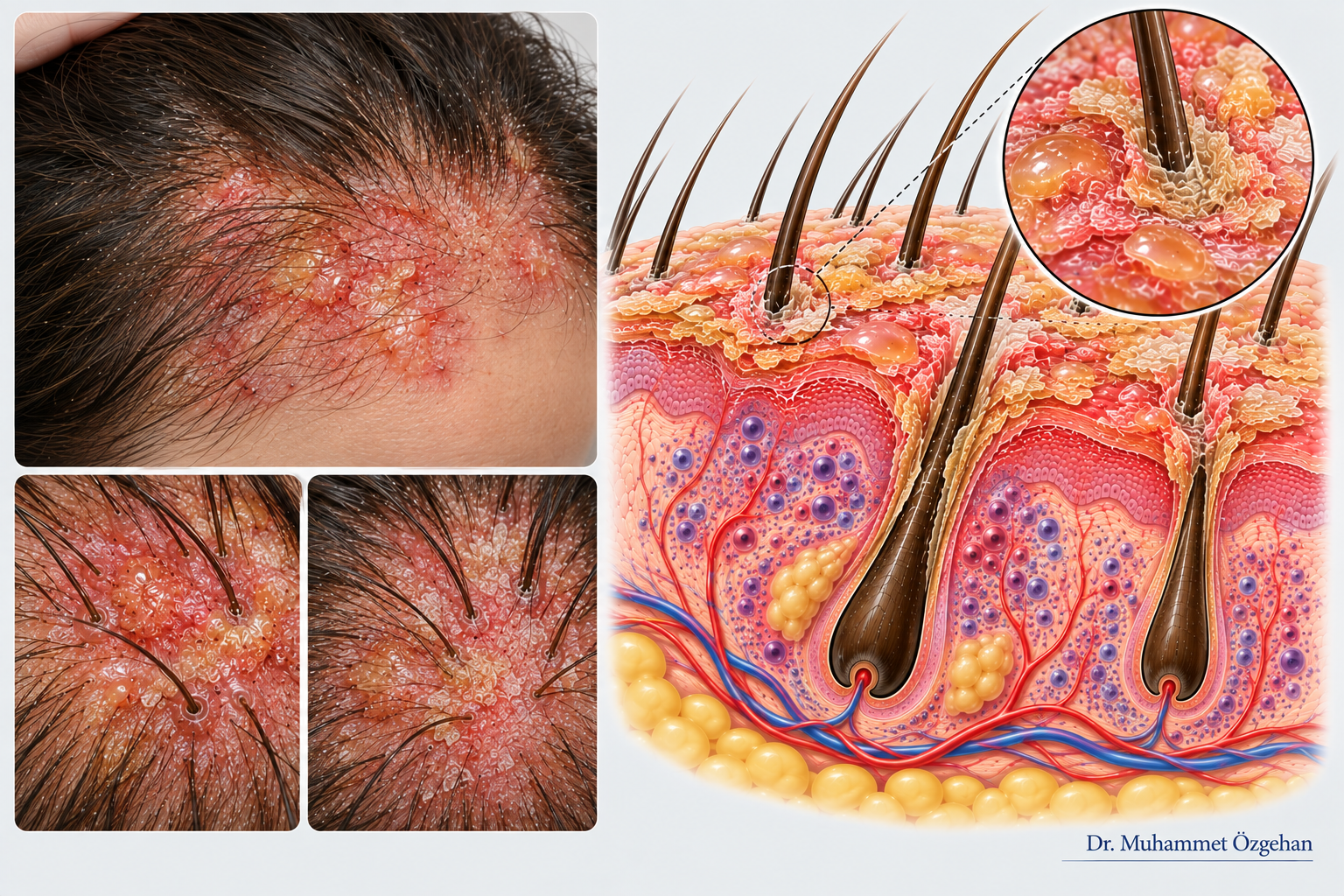
📌 Patient Information Section: What Does This Condition Mean?
Our scalp is highly sensitive to external factors. This category examines eczemas caused by the immune system's hypersensitivity or direct contact with chemical substances:
- Atopic Dermatitis (Scalp Involvement): It typically manifests in individuals with a genetic predisposition to allergies (with a history of asthma, hay fever), especially during infancy/childhood or in adults, with severe itching, dryness, and scaling on the scalp and nape of the neck.
- Allergic Contact Dermatitis: This is an allergic reaction developed by the skin against certain chemicals found in hair dyes (especially PPD - para-phenylenediamine - in black dyes), shampoos, perfumes, or hair care products. Hours or days after application, it can cause severe redness, edema (swelling), and weeping lesions on the scalp, hairline, behind the ears, and on the neck.
- Irritant Contact Dermatitis: Even without an allergy, this occurs when very harsh chemicals, bleaches, or improperly applied concentrated solutions (e.g., incorrect lighteners) directly burn and irritate the scalp.
🩺 Clinical & Medical Guide for Physicians
- Etiology and Pathophysiology:
- Atopic Dermatitis: Skin barrier dysfunction (filaggrin mutations) and Type 2 T-cell mediated inflammatory response.
- Contact Dermatitis: Type IV delayed-type hypersensitivity reaction (allergic) or toxic tissue damage caused by chemical agents disrupting the stratum corneum (irritant).
- Diagnostic Criteria and Clinical Findings: Erythema, edema, vesiculation (weeping), crusting at the hair margins, and lichenification (skin thickening) due to chronic scratching. Edematous reactions involving the face and eyelids in cases of hair dye allergies.
- Dermoscopy (Trichoscopy) Findings: In the acute phase, yellowish weeping foci in the interfollicular area, exudative crusts, irregular vascular structures, and traumatic excoriation marks due to scratching.
- Histopathological Diagnosis (Punch Biopsy):
- Biopsy Indication and Technique: In atypical eczemas or resistant cases where differentiation from other cicatricial/non-cicatricial alopecias is difficult, a 4 mm punch biopsy is taken. Examination is performed with vertical sections.
- Pathological Findings: Marked spongiosis (intercellular edema and vesicle formation), acanthosis, parakeratosis in the epidermis, and superficial perivascular lymphocytic and eosinophilic (in allergic cases) infiltrate.
- Current Treatment Protocols:
- Elimination of Contact and Barrier Repair: Immediate discontinuation of hair dyes, shampoos, and chemical products suspected of being allergens. Moisturizing lotions to repair the skin barrier.
- Anti-inflammatory Treatment: Short-term topical corticosteroid lotions of moderate/high potency or calcineurin inhibitors (tacrolimus/pimecrolimus) during the acute weeping phase.
- Systemic Approach: Short courses of systemic corticosteroids and sedative antihistamines for severe edema and allergic reactions. Planning a Patch Test in dermatology clinics for allergen identification. Additionally, expertise and treatment approaches can be reviewed for clinical and surgical evaluations.
Scientific References and Bibliography
- Cuyler M, Twilley D, Lall N. Eczema: etiology, subtypes, therapeutic approaches and socioeconomic impact. Front Allergy. 2026 Jan 12;6:1675475. doi: 10.3389/falgy.2025.1675475. PMID: 41602867; PMCID: PMC12833359. PubMed Link
- Blicharz L, Michalczyk A, Maj M, Czuwara J, Olszewska M, Rudnicka L. Head and neck dermatitis: a variant of atopic dermatitis. Ital J Dermatol Venerol. 2025 Apr;160(2):123-144. doi: 10.23736/S2784-8671.25.08001-6. PMID: 40248964. PubMed Link
- Navarro-Triviño FJ, Salazar-Nievas M, Sanz-Cabanillas JL, Arjona-Aguilera C. Efficacy and safety of tralokinumab in the treatment of head and neck pattern atopic dermatitis: A multicentre study of 12 patients. Australas J Dermatol. 2024 May;65(3):260-265. doi: 10.1111/ajd.14264. Epub 2024 Apr 8. PMID: 38587232. PubMed Link