


Medical Hair Encyclopedia
Dermatological pathologies and evidence-based clinical guidelines at international standards.
CLINICAL GUIDELINE & PATHOLOGY
Anagen Effluvium (Acute and Drug-Induced Hair Loss) Diagnosis and Treatment Guide
📌 Patient Information Section: What Does This Condition Mean?
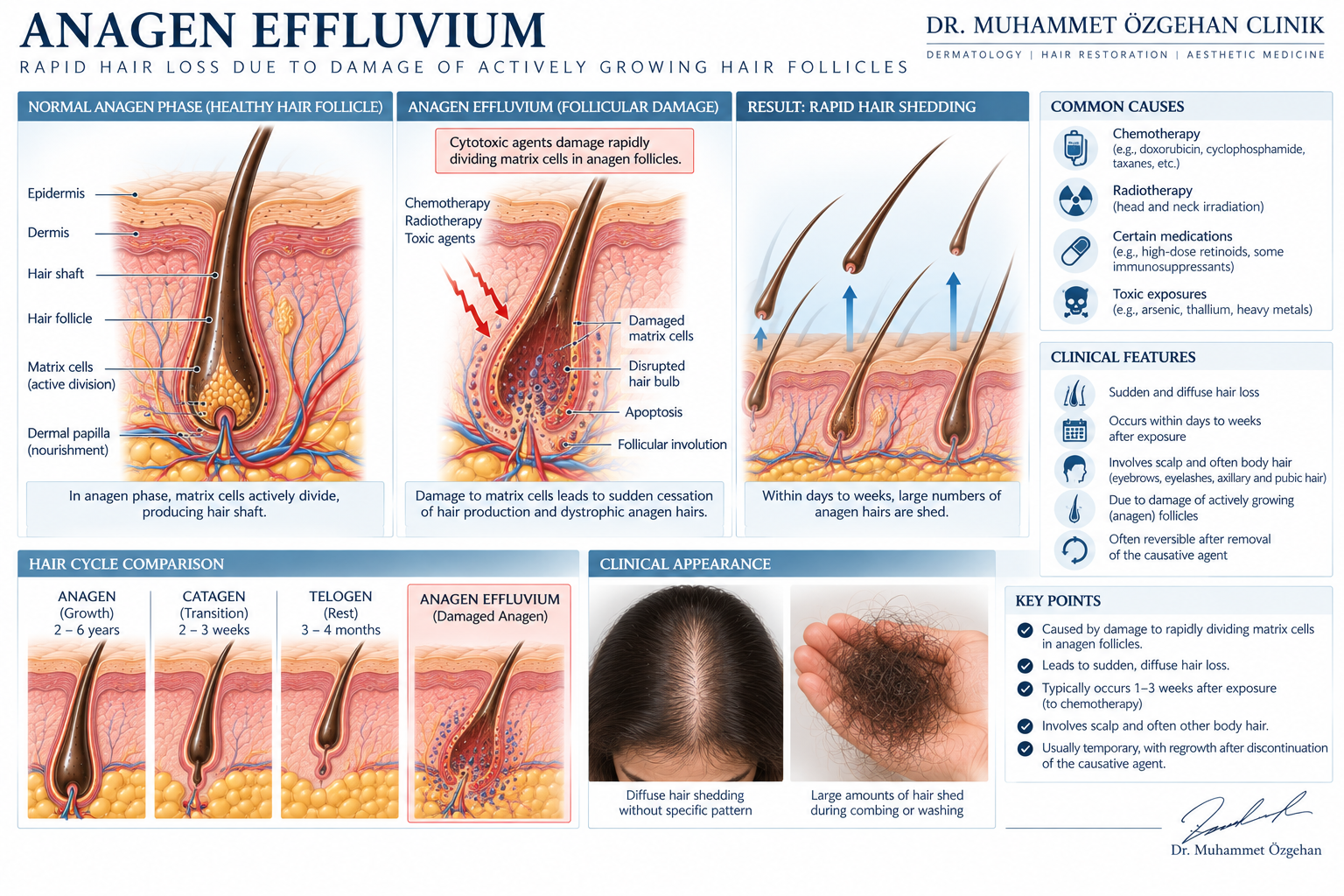
Anagen effluvium, unlike telogen effluvium, is a type of hair loss that occurs suddenly, severely, and extensively due to the direct suppression of hair production cells, not several months later, but days to 2 weeks after the trigger.
- Main Causes: Chemotherapy drugs used in cancer treatment, radiotherapy (radiation therapy) applied to the head and neck region, heavy metal poisoning, and certain acute immune system attacks.
- Is it Reversible?: In most cases of chemotherapy and radiotherapy (excluding specific high-dose irradiations), this hair loss is completely temporary. A few months after the treatment process is completed, hair follicles reactivate and begin to regrow with their former quality.
🩺 Clinical & Medical Guide for Physicians
- Diagnostic Criteria and Clinical Findings: Inquiry into the causative drug, radiation history, or toxic exposure. Sudden and dystrophic breakage and shedding of hairs from the shaft due to metabolic arrest of rapidly dividing anagen matrix cells.
- Management and Prevention Protocols:
- Scalp Cooling Technologies: Scalp cooling systems applied during chemotherapy can constrict hair follicle blood vessels, reducing drug delivery to the follicles and partially preventing hair loss. Additionally, specialized expertise and treatment approaches can be reviewed for clinical and surgical evaluations.
- Psychological and Supportive Approach: Informing the patient that the process is temporary and ensuring multidisciplinary follow-up.
Scientific References and Bibliography
- Saleh D, Nassereddin A, Saleh HM, Cook C. Anagen Effluvium. 2024 Apr 30. In: StatPearls [Internet]. Treasure Island (FL): StatPearls Publishing; 2024 Jan–. PMID: 29493918. PubMed Link
- Kanwar AJ, Narang T. Anagen effluvium. Indian J Dermatol Venereol Leprol. 2013 Sep-Oct;79(5):604-12. doi: 10.4103/0378-6323.116728. PMID: 23974578. PubMed Link
- Guerrero-Putz MD, Flores-Dominguez AC, Castillo-de la Garza RJ, Figueroa-Sanchez JA, Tosti A, Garza-Rodríguez V. Anagen Effluvium after Neurointerventional Radiation: Trichoscopy as a Diagnostic Ally. Skin Appendage Disord. 2022 Mar;8(2):102-107. doi: 10.1159/000518743. Epub 2021 Sep 14. PMID: 35419426; PMCID: PMC8928210. PubMed Link