Dr. Muhammet Özgehan
TR EN DE FR RU AR

Medical Hair Encyclopedia

Dermatological pathologies and evidence-based clinical guidelines at international standards.

Anemia (Iron / Ferritin Deficiency) and Hair Loss
Prepared by: Dr. Muhammet Özgehan | Turkish Hair and Scalp Diseases Association

This guide has been compiled by Dr. Muhammet Özgehan in light of current literature.

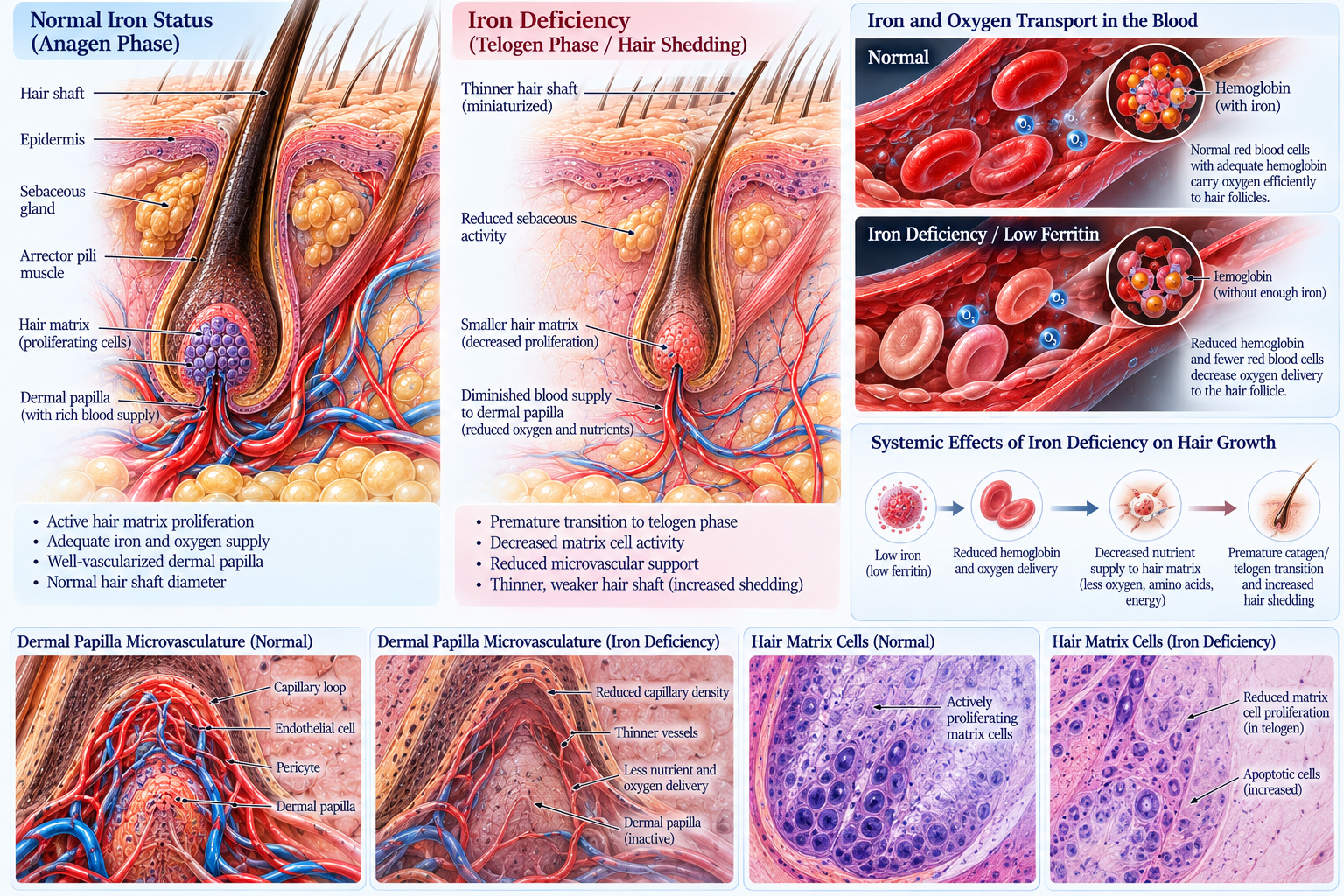
Illustration of Anemia, Iron Deficiency, Ferritin, and Hair Loss

Figure: Implications of depleted iron and ferritin stores on hair follicle oxygenation and cycling.

Cellular Oxygenation and Hair Matrix Dynamics

Iron and ferritin are vital cofactors for the rapidly dividing cells of hair follicles, as they are throughout the body. As highlighted in the visual above, the depletion of iron stores and anemic conditions reduce the amount of oxygen transported to hair roots, paving the way for prolonged telogen phase and diffuse hair loss.

📌 Patient Information Section: What Does This Condition Mean?

Why Do Iron and Ferritin Deficiencies Affect Hair?

When iron levels in the body decrease, the rapidly dividing cells in hair follicles do not receive sufficient oxygen and nutrients. Ferritin indicates the body's iron stores; when ferritin levels drop, hair roots weaken, and the growth cycle is negatively affected.

What Are the Symptoms?

  • Chronic fatigue and weakness
  • Brittle nails or spoon-shaped nails (koilonychia)
  • Pale skin and difficulty concentrating
  • Diffuse hair loss when showering or brushing

What Should Be Done?

Shampoos alone will not be sufficient in this situation. Along with a Complete Blood Count (Hemogram), Serum Iron, Total Iron Binding Capacity (TIBC), and Ferritin levels must be measured, and the deficiency should be corrected under the supervision of a specialist physician.

🩺 Clinical & Medical Guide for Physicians

Clinical Trichology Protocol: Hair Loss Due to Anemia and Iron Storage Deficiency

  • Pathophysiology: Iron is an essential cofactor for ribonucleotide reductase, a rate-limiting enzyme for DNA synthesis in rapidly proliferating hair matrix keratinocytes. Iron deficiency, with or without overt anemia, triggers an early transition from anagen to telogen, leading to chronic diffuse telogen effluvium.
  • Diagnostic Approach: A comprehensive blood panel including Complete Blood Count (CBC), serum iron, total iron binding capacity (TIBC), transferrin saturation, and serum ferritin levels. In trichology, it is known that ferritin thresholds below 30-50 ng/mL negatively affect hair growth, even in the absence of anemia.
  • Evidence-Based Management: Targeted oral or parenteral iron supplementation based on the degree of deficiency and gastrointestinal tolerance. In addition to supportive trichological care, etiological investigation and treatment of underlying iron loss causes (e.g., menorrhagia, gastrointestinal pathologies) are essential. Furthermore, specialized and treatment approaches can be reviewed for clinical and surgical evaluations.

Scientific References and Bibliography

  • Chen V, Strazzulla L, Asbeck SM, Bellodi Schmidt F. Etiology, management, and outcomes of pediatric telogen effluvium: A single-center study in the United States. Pediatr Dermatol. 2023 Jan;40(1):120-124. doi: 10.1111/pde.15154. Epub 2022 Oct 20. PMID: 36263718. PubMed Link
  • Cheung EJ, Sink JR, English Iii JC. Vitamin and Mineral Deficiencies in Patients With Telogen Effluvium: A Retrospective Cross-Sectional Study. J Drugs Dermatol. 2016 Oct 1;15(10):1235-1237. PMID: 27741341. PubMed Link

Anemia, Iron, Ferritin, and Thalassemia Deficiency Hair Loss Frequently Asked Questions

Questions about anemia types, ferritin values, thalassemia relationship, and treatment approaches, with the expertise of Dr. Muhammet Özgehan Clinic.

Ferritin is a vital protein that stores iron in the body. Iron deficiency and low ferritin levels prevent the transport of oxygen and nutrients needed by hair follicles at a cellular level. Dr. Muhammet Özgehan states that this condition disrupts the hair cycle, causing follicles to enter the resting (telogen) phase prematurely and leading to significant hair loss.

The main blood disorders and types of anemia that directly affect hair health are:

  • Iron Deficiency Anemia: The most common cause, it pushes hair into the early telogen phase due to depleted ferritin stores.
  • Thalassemia (Mediterranean Anemia): Can weaken hair follicles due to chronic oxygen deficiency (hypoxia), oxidative stress, and fluctuations in iron metabolism.
  • Megaloblastic Anemia: Occurs due to vitamin B12 or folic acid deficiency, negatively affecting rapidly dividing hair matrix cells.
  • Anemia of Chronic Disease: Impairs the nourishment of hair follicles as the body cannot properly utilize iron in inflammatory conditions.

Although low ferritin values may be considered "normal" within general laboratory reference ranges, this threshold is insufficient for healthy hair growth and follicle metabolism. Dr. Muhammet Özgehan emphasizes that for the preservation of hair health and cessation of hair loss, ferritin levels should be maintained within clinically ideal target ranges (generally 50-70 ng/mL and above).

In hair loss due to iron deficiency, treatment not only addresses the deficiency but is also supported by protocols that enhance hair quality. Current approaches applied at Dr. Muhammet Özgehan's clinic include:

  • Personalized Supplementation Plan: Determining the most appropriate oral or parenteral iron replacement protocols based on blood tests.
  • Root-Nourishing PRP and Mesotherapy Cures: Micro-injections applied to increase micro-circulation in the scalp, revitalizing weakened roots and accelerating cellular healing.
  • Dermatological Follow-up: Regular monitoring of ferritin store levels to stabilize the hair cycle.

Due to the biological nature of the hair cycle, hair loss is not expected to cease abruptly even after iron stores are replenished. Dr. Muhammet Özgehan specifically informs his patients that a reduction in hair loss and the observation of new hair growth typically require a period of 3 to 6 months after initiating the correct treatment protocol and supplementation.

Hair transplantation surgery is not recommended directly for patients with active anemia, severe iron/ferritin deficiency, or uncontrolled blood disorders. Dr. Muhammet Özgehan states that for transplanted grafts to take hold and grow healthily, the body's metabolic and hematological values must first be brought to ideal levels, and surgical planning can only be done after this balance is achieved.

For Your Questions and Clinic Appointment

For any questions about hair loss due to anemia, iron deficiency, and thalassemia, or for personalized treatment planning, you can contact Dr. Muhammet Özgehan Clinic immediately.