Dr. Muhammet Özgehan
TR EN DE FR RU AR

Medical Hair Encyclopedia

Dermatological pathologies and evidence-based clinical guidelines at international standards.

Bacterial Scalp Infections (Folliculitis, Furuncles, and Carbuncles) – Diagnosis and Treatment Guide
Prepared by: Dr. Muhammet Özgehan | Turkish Hair and Scalp Diseases Association

This guide has been compiled by Dr. Muhammet Özgehan in light of current literature.

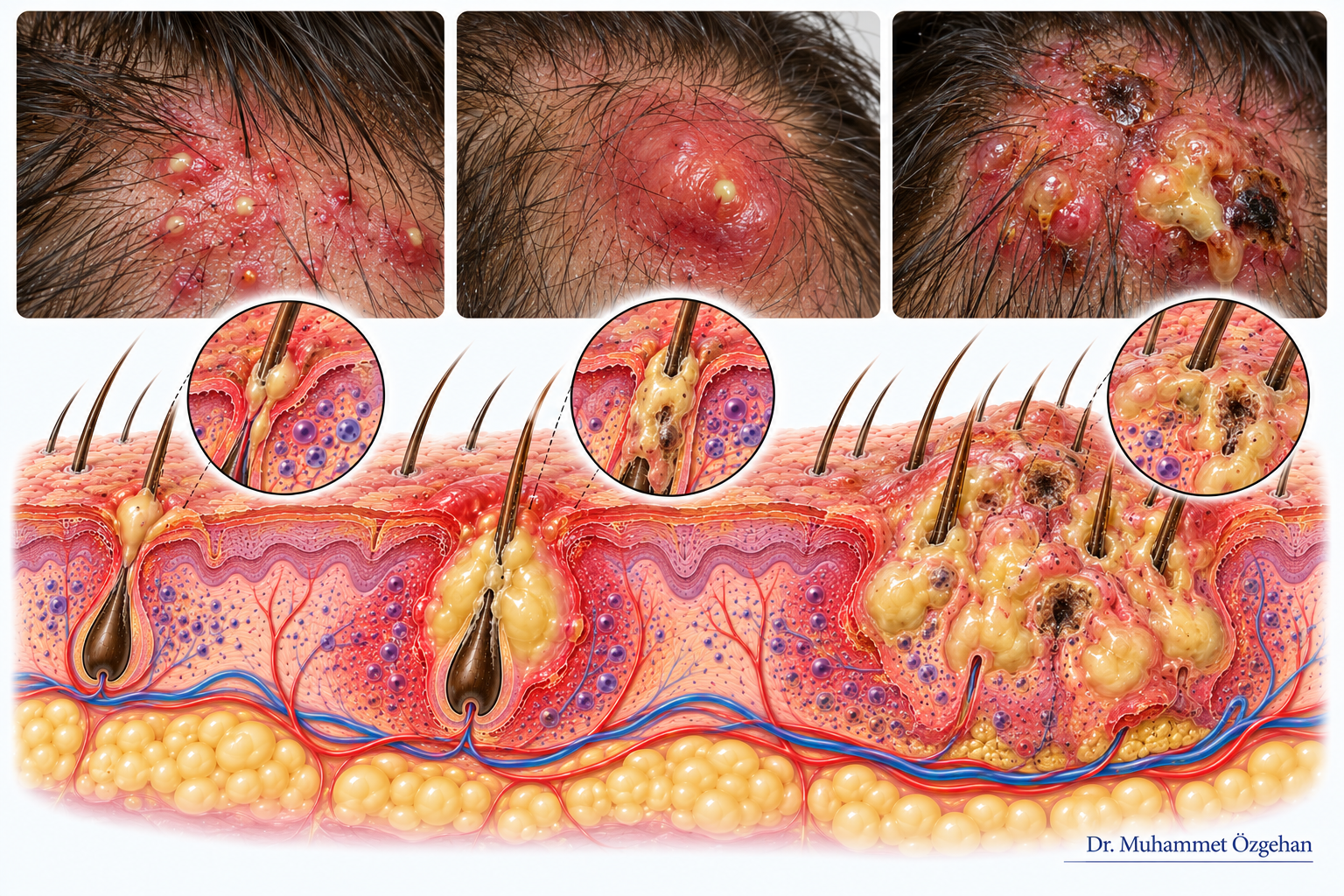
Bacterial Scalp Infections Folliculitis Furuncles Carbuncles Clinical Illustration

📌 Patient Information Section: What Does This Condition Mean?

Acute purulent (pus-filled) infections develop when hair follicles and surrounding tissues in the scalp are invaded by bacteria (especially Staphylococcus aureus).

  • Folliculitis: Small, itchy or slightly painful inflamed pustules around individual hair follicles.
  • Furuncle (Boil): Painful, firm, pus-filled deep swellings resulting from inflammation of the entire hair follicle and deep tissue.
  • Carbuncle: A severe infection focus formed by the coalescence of multiple adjacent furuncles, creating a larger, deeper lesion with multiple drainage points. May cause fever.
  • What to Do?: Never squeeze or pop them (especially dangerous on the scalp due to the risk of venous congestion). Antibiotic treatment should be planned under the supervision of a specialist physician.

🩺 Clinical & Medical Guide for Physicians

  • Etiology and Pathophysiology: The primary causative agents are Staphylococcus aureus (including Methicillin-Resistant S. aureus - MRSA) and sometimes gram-negative bacilli. Trauma, hyperhidrosis, immunosuppression, and occlusion are triggering factors.
  • Diagnostic Criteria and Clinical Findings: Pustule in the follicle with surrounding erythema (folliculitis); deep, fluctuant, painful nodule with a central necrotic plug (furuncle); coalescing fluctuant masses and systemic symptoms (carbuncle).
  • Dermoscopy (Trichoscopy) Findings: Yellow-green purulent exudate crusts occluding follicular ostia, bright erythema in the surrounding area, and acute pustular structures in a halo around the hair shaft.
  • Histopathological Diagnosis (Punch / Excisional Biopsy):
    • Biopsy Indication: Taken in chronic, resistant, or deep infections to confirm the causative agent and differentiate from deep mycoses/scarring alopecias.
    • Pathology: Dense neutrophilic infiltrate, abscess formation, necrosis, and destruction of the follicular wall within the follicular lumen and dermis.
  • Current Treatment Protocols:
    • Local Treatment: Warm compresses, topical mupirocin or retapamulin ointment. Antiseptic shampoos for simple folliculitis.
    • Systemic Treatment: Systemic antistaphylococcal antibiotics for furuncles and carbuncles (Amoxicillin-Clavulanate, 1st generation cephalosporins, or Clindamycin/Trimethoprim-Sulfamethoxazole if MRSA is suspected). Incision and drainage if necessary. Additionally, specialized expertise and treatment approaches can be reviewed for clinical and surgical evaluations.

Scientific References and Bibliography

  • Lin HS, Lin PT, Tsai YS, Wang SH, Chi CC. Interventions for bacterial folliculitis and boils (furuncles and carbuncles). Cochrane Database Syst Rev. 2021 Feb 26;2(2):CD013099. doi: 10.1002/14651858.CD013099.pub2. PMID: 33634465; PMCID: PMC8130991. PubMed Link
  • Vandersteen PR. Bacterial infections of the skin. Minn Med. 1974 Oct;57(10):838-43. PMID: 4608072. PubMed Link
  • Jorda V. Diseases of hairy skin. Curr Probl Dermatol. 1984;12:185-223. PMID: 6389015. PubMed Link

Bacterial Scalp Infections and Post-Hair Transplant Folliculitis Frequently Asked Questions

Insights into scalp infections, types of folliculitis, treatment approaches, and post-hair transplant processes, with the expertise of Dr. Muhammet Özgehan Clinic.

These infections are typically a progressive spectrum caused by the bacterium Staphylococcus aureus:

  • Folliculitis: Superficial inflammation of hair follicles, characterized by small, pimple-like red bumps.
  • Furuncle (Boil): A deeper, painful, pus-filled infection of a hair follicle and surrounding tissue. It is an advanced stage of folliculitis.
  • Carbuncle: A cluster of interconnected furuncles (boils), forming a deeper and larger, more severe infection, often accompanied by general symptoms like fever.

Dr. Muhammet Özgehan emphasizes the importance of accurate diagnosis and treatment for these conditions.

Yes, especially deep infections (furuncles and carbuncles) can irreversibly destroy hair follicles. Dr. Muhammet Özgehan states that the inflammatory process can damage the follicular structure, leading to permanent hair loss known as scarring (cicatricial) alopecia. Superficial folliculitis is usually temporary but can suppress hair growth if it becomes chronic.

Treatment is determined by the severity and depth of the infection. The primary approaches applied at Dr. Muhammet Özgehan's clinic include:

  • Topical and Systemic Antibiotics: Antibacterial shampoos or creams for mild folliculitis; oral or intravenous antibiotic therapy for deep infections (furuncles/carbuncles).
  • Incision and Drainage (Surgical Intervention): Mature boils or carbuncles may require sterile drainage of pus.
  • Clinical Support: Preventing the spread of infection and managing underlying immune or hygiene factors.

Maintaining hygiene and scalp health is essential. Dr. Muhammet Özgehan recommends the following precautions to his patients:

  • Regularly washing the scalp with appropriate antibacterial or medicated shampoos.
  • Strictly avoiding the use of shared combs, towels, or hats.
  • Not irritating the skin if there is itching or trauma, to prevent creating entry points for bacteria.
  • Undergoing dermatological evaluation for carrier status in cases of recurrent infections.

Pimple-like bumps seen after hair transplantation (typically between the 2nd and 6th weeks) are post-operative folliculitis. This condition arises as new roots settle and new hair strands try to emerge from the skin, irritating the follicle. Dr. Muhammet Özgehan emphasizes that mild and temporary folliculitis, when managed correctly, does not harm grafts, but patients squeezing these pimples can endanger the roots.

Hair transplantation is not performed when an active bacterial infection is present; if severe or prolonged folliculitis develops after the operation, self-intervention should be avoided. At Dr. Muhammet Özgehan's clinic, the process is safely managed with sterile disinfection, physician-controlled topical/oral antiseptic protocols, and controlled extraction if necessary.

For Your Questions and Clinic Appointment

For any questions about scalp infections, folliculitis, post-hair transplant processes, or for a personalized treatment plan, you can contact Dr. Muhammet Özgehan Clinic immediately.