Dr. Muhammet Özgehan
TR EN DE FR RU AR

Medical Hair Encyclopedia

Dermatological pathologies and evidence-based clinical guidelines at international standards.

Frontal Fibrosing Alopecia (FFA) Diagnosis and Treatment Guide
Prepared by: Dr. Muhammet Özgehan | Turkish Hair and Scalp Diseases Association

This guide has been compiled by Dr. Muhammet Özgehan in light of current literature.

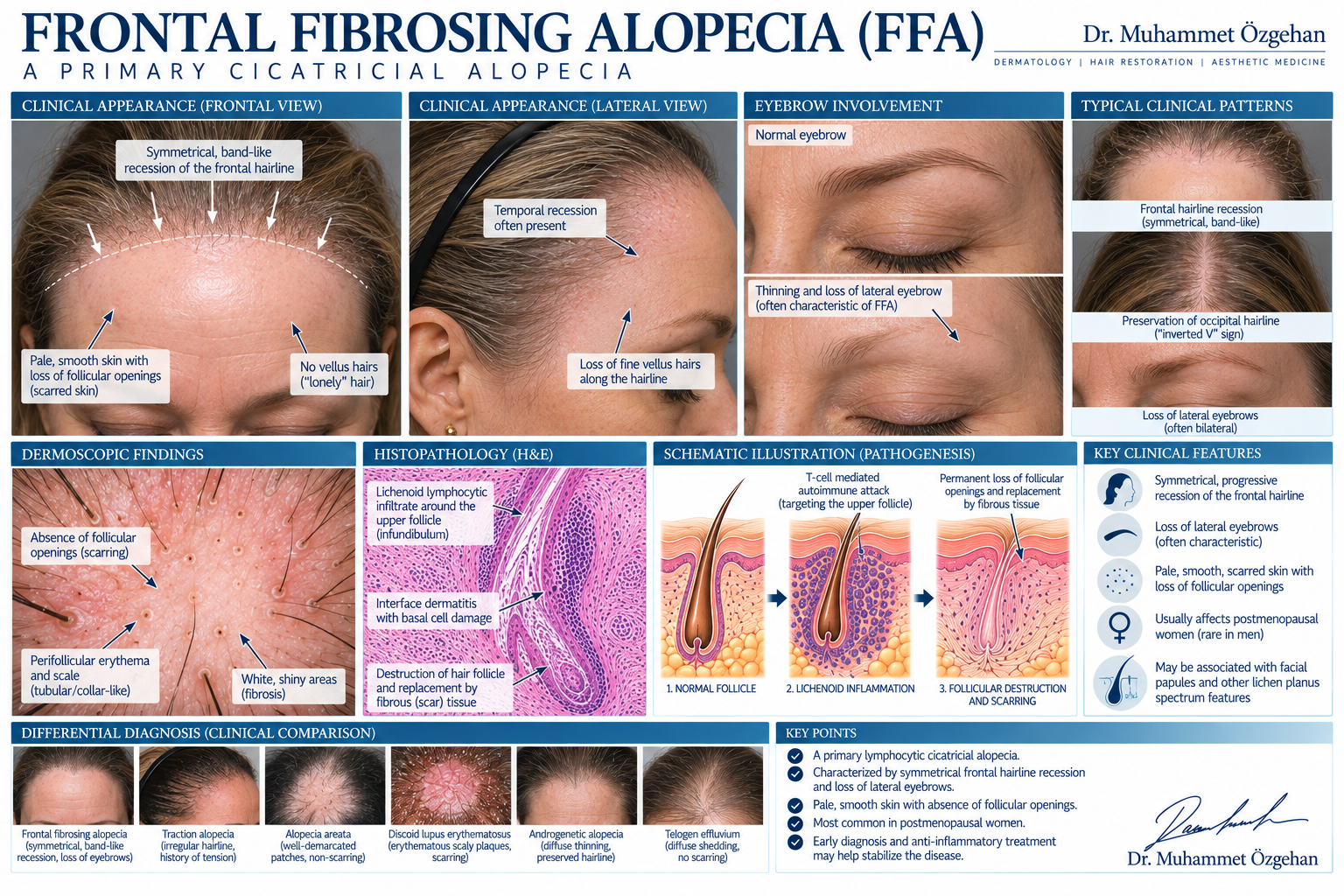
Clinical and Medical Illustration of Frontal Fibrosing Alopecia (FFA) Hair Loss

📌 Patient Information Section: What Does This Condition Mean?

Frontal Fibrosing Alopecia (FFA) is a permanent (scarring) type of hair loss characterized by the gradual recession of the hairline in the forehead area, thinning of the temples, and frequent loss of eyebrows.

  • Who is Affected?: It is most commonly seen in postmenopausal women.
  • Symptoms: Paleness and smoothness of the skin accompanying the recession of the forehead line. Thinning or loss of the outer third of the eyebrows is one of the first warning signs.

🩺 Clinical & Medical Guide for Physicians

  • Clinical Criteria: Symmetrical recession of the anterior temporal and frontal hairline. "Lonely hair sign" (isolated hairs remaining on the front line). Lateral loss of eyebrows.
  • Histopathological Diagnosis (Punch Biopsy):
    • Technique: A 4 mm punch biopsy from the active receding border of the front hairline; it should be processed in transverse (horizontal) sections.
    • Pathology: Dense lymphocytic infiltrate around the isthmus, complete destruction of sebaceous glands, and lamellar-like perifollicular fibrosis.
  • Treatment Protocols: Topical/intralesional corticosteroids. Systemic 5-alpha reductase inhibitors (finasteride/dutasteride), hydroxychloroquine, or cyclosporine. Additionally, specialized expertise and treatment approaches can be reviewed for clinical and surgical evaluations.

Scientific References and Bibliography

  • Alenezi S, Ezzat RZ, Miteva M. Frontal fibrosing alopecia part I - Diagnosis and clinical presentation. J Am Acad Dermatol. 2026 Apr;94(4):1059-1072. doi: 10.1016/j.jaad.2024.10.126. Epub 2025 Jan 15. PMID: 39824360. PubMed Link
  • Kerkemeyer KLS, Eisman S, Bhoyrul B, Pinczewski J, Sinclair RD. Frontal fibrosing alopecia. Clin Dermatol. 2021 Mar-Apr;39(2):183-193. doi: 10.1016/j.clindermatol.2020.10.007. Epub 2020 Oct 17. PMID: 34272007. PubMed Link
  • Miao YJ, Jing J, Du XF, Mao MQ, Yang XS, Lv ZF. Frontal fibrosing alopecia: A review of disease pathogenesis. Front Med (Lausanne). 2022 Jul 25;9:911944. doi: 10.3389/fmed.2022.911944. PMID: 35957858; PMCID: PMC9357920. PubMed Link
  • Krzesłowska WJ, Woźniacka A. The Frontal Fibrosing Alopecia Treatment Dilemma. J Clin Med. 2024 Apr 7;13(7):2137. doi: 10.3390/jcm13072137. PMID: 38610902; PMCID: PMC11012663. PubMed Link

Frontal Fibrosing Alopecia (FFA) and Hairline Recession Frequently Asked Questions

Frequently asked questions about the causes of Frontal Fibrosing Alopecia (FFA), scarring alopecia processes, and treatment approaches, provided with the expertise of Dr. Muhammet Özgehan Clinic.

Frontal fibrosing alopecia (FFA) is a type of scarring (cicatricial) alopecia characterized by the symmetrical recession of the hairline, typically in the forehead area. While it is generally seen in postmenopausal women, it can also occur at younger ages. Dr. Muhammet Özgehan states that hairline recession in this condition is frequently accompanied by eyebrow loss (especially in the outer parts of the eyebrows).

Yes, because FFA belongs to the scarring alopecia group, the hair follicles targeted by the inflammatory process are irreversibly destroyed over time and replaced by connective tissue (scar). This leads to the permanent loss of follicles. Dr. Muhammet Özgehan emphasizes that early diagnosis and medical interventions to stop the rate of shedding are vital for preserving existing hair and halting recession.

The primary goal in FFA treatment is to stop the recession of the hairline and suppress the inflammatory process and immune response attacking the follicles. Current approaches applied at Dr. Muhammet Özgehan clinic include:

  • Medical and Anti-inflammatory Protocols: Topical, intralesional (local injection), or systemic agent treatments planned under physician supervision.
  • Stem Cell and Tissue Support Therapies: Supportive applications planned in suitable cases to protect scalp health and increase microcirculation.
  • Disease Activity Monitoring: Regular monitoring of the recession rate through trichoscopic examinations and updating of protocols.

Hair transplantation is strictly not performed during periods when the disease is active and the hairline continues to recede. Dr. Muhammet Özgehan states that performing surgical intervention before the inflammatory process in FFA has quieted down for years (entering complete remission) may result in the loss of the transplanted grafts as well. However, if the disease has been completely halted and stabilized for a long period, the option of surgery may be considered in very selected special cases following a physician's evaluation.

Scarring alopecia processes require disciplined follow-up. Dr. Muhammet Özgehan offers the following recommendations for individuals diagnosed with FFA:

  • Wearing hats and taking UV protection measures to protect the scalp, and especially the hairline, from sun rays.
  • Avoiding contact of chemical care products or hair dyes used in the facial area with the hairline.
  • Consulting the clinic without delay if itching, stinging, redness, or sudden recession is noticed in the forehead area.

For Your Questions and Clinic Appointment

You can contact Dr. Muhammet Özgehan Clinic immediately for any questions regarding Frontal Fibrosing Alopecia (FFA), hairline recession, and scarring alopecia treatment planning, or to schedule a personal examination appointment.